No Psychiatrist in Your Area? How to Get Care Anyway
No Psychiatrist in Your Area? How to Get Care Anyway
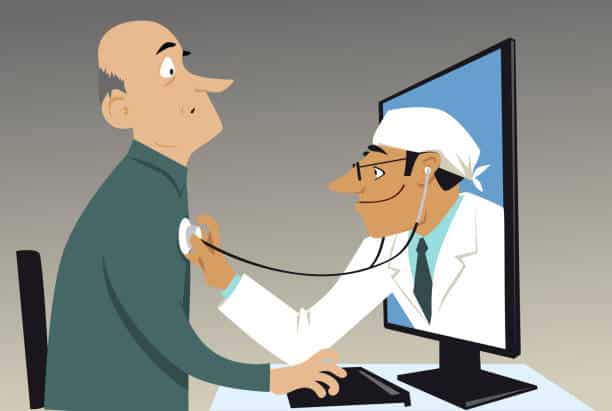
Psychiatric licensure is granted by state, not by county or city. Any provider licensed in your state can evaluate, diagnose, and prescribe for you by video, whether they practise forty minutes away or four hundred miles away. If your county has no psychiatrist — and hundreds of U.S. counties do not — that fact is the single most useful thing to know, because it changes the search from “who is near me” to “who is licensed in my state and taking new patients.”
That does not make the other barriers disappear. Patchy broadband, no private room, no device, and the particular difficulty of seeking mental health care in a town where everyone knows everyone are all real. Each has a workaround, and they are set out below.
First, confirm what you are dealing with
The federal government tracks provider scarcity formally. HRSA designates Mental Health Professional Shortage Areas — places where the population-to-provider ratio falls below a workable threshold. You can look up your county on the HRSA data portal in about a minute.
This is worth doing for two reasons. It tells you whether to bother searching locally at all. And it is genuinely clarifying — people who have spent months failing to find care often conclude they are doing something wrong. Usually they are not. The providers are not there.
Working around the five real barriers
1. Bad internet
Video is not always required. Many insurers, and a number of state regulations, cover audio-only mental health visits where video is not workable — New York’s telehealth rules explicitly include audio-only, and other states have similar provisions. Ask any practice directly whether they offer phone appointments and whether your plan covers them.
If you want video and home connection is unreliable, public libraries frequently have private study rooms and stable connections, and librarians in rural areas are often quietly used to this request. Cellular data in a parked car sometimes outperforms rural DSL.
2. No private space
A parked car is the most common answer, and it works — not while driving. Headphones make a shared house workable for the audio half of the problem. Some people schedule appointments during school hours or shift changes. Providers hear all of this routinely and will not think it odd.
3. No computer
A smartphone is sufficient for almost every telehealth platform. If the practice requires an app, ask whether a browser link works instead, which avoids storage and update problems on older phones.
4. Cost
Three routes worth knowing. Federally Qualified Health Centers operate sliding-scale fees based on income and exist specifically to serve underserved areas — many now have behavioral health staff. Certified Community Behavioral Health Clinics are required to serve patients regardless of ability to pay. And self-pay telepsychiatry is sometimes cheaper than in-network care when a deductible is high and unmet — the arithmetic is in what online psychiatry actually costs.
5. Everyone knows everyone
This barrier gets discussed least and stops people most. In a town of two thousand, the parking lot outside the counselling office is visible, and the receptionist may be someone’s cousin.
Remote care from a provider outside your county is a genuine answer to this. Nobody sees you arrive. Your prescriber is not at the same church. Pharmacy is the remaining exposure, and mail-order pharmacy through most insurance plans removes that too.
Widen the search beyond psychiatrists
Board-certified psychiatric mental health nurse practitioners (PMHNP-BC) diagnose, prescribe, and manage psychiatric medication. There are more of them, they are more likely to be taking new patients, and for the common outpatient conditions — depression, anxiety, PTSD, ADHD, stable bipolar disorder — the service is the same. Filtering only for “psychiatrist” cuts out the part of the workforce most likely to have availability.
Your primary care physician is also a legitimate starting point rather than a consolation prize. PCPs manage uncomplicated depression and anxiety routinely, can order thyroid and other labs, and can begin a first-line medication while you wait for specialist care.
And prescribing and therapy do not have to come from the same person or start at the same time. Therapist availability is generally better than prescriber availability.
What still requires someone physically present
Being straightforward about the limits matters more in rural areas, because the nearest alternative may be hours away and worth planning for in advance rather than discovering in a crisis.
- Bloodwork. Lithium levels, thyroid panels, metabolic monitoring. Ordered remotely, drawn locally — usually at a hospital outpatient lab or a retail draw site.
- Long-acting injectable medications. These need a clinic.
- Acute crises, active psychosis or mania, and supervised withdrawal from alcohol or benzodiazepines.
If any of those apply, find out now where the nearest option is and whether they take your insurance. The fuller comparison covers where each format is stronger.
Why rural access matters clinically, not just logistically
Distance does not reduce how often mental illness occurs. It reduces how often it gets treated, and untreated conditions get harder to treat. Provider shortages track with higher rates of untreated depression, more psychiatric presentations to emergency departments, and elevated suicide rates in rural areas relative to urban ones.
There is a specific failure mode worth naming. Psychiatric medication needs follow-up every two to four weeks while a dose is being adjusted. When each appointment costs half a day of driving, people stop attending after the first or second visit — and treatment is recorded as having failed when what actually failed was the travel. Remote follow-up removes that, and consistency is most of what determines whether psychiatric treatment works.
Frequently asked questions
Can a psychiatrist in another city legally treat me?
Yes, if they hold a licence in the state where you are physically located during the appointment. Distance within that state is irrelevant.
What if I have no internet at all?
Ask about audio-only appointments by phone. Many plans and several states cover them, and for psychiatric care the loss compared to video is smaller than for most specialties.
Can I get medication without ever being seen in person?
For most psychiatric medications, yes. Controlled substances have additional federal and state requirements that change periodically — ask any provider what currently applies.
Is there free or low-cost care?
Federally Qualified Health Centers and Certified Community Behavioral Health Clinics both serve patients on income-based or no-cost terms. 988 is free at any hour.
What if my county has no pharmacy either?
Mail-order pharmacy is included in most insurance plans and works for nearly all non-controlled psychiatric medications. Raise it at the appointment so the prescription is sent to the right place.
Distance is not the barrier it used to be
Samz Mental Health provides telepsychiatry with a board-certified psychiatric nurse practitioner across Texas, New York, Florida, Colorado, Washington, Maryland, New Hampshire, New Mexico, and Iowa — anywhere in those states. No referral required.
Sources
- HRSA — Health Professional Shortage Area finder
- HRSA — Find a health center
- 988 Suicide & Crisis Lifeline
Medically reviewed by Samuel Omolade, PMHNP-BC, board-certified Psychiatric Mental Health Nurse Practitioner. Last reviewed July 2026. This article is general information and is not a substitute for individual medical advice.