
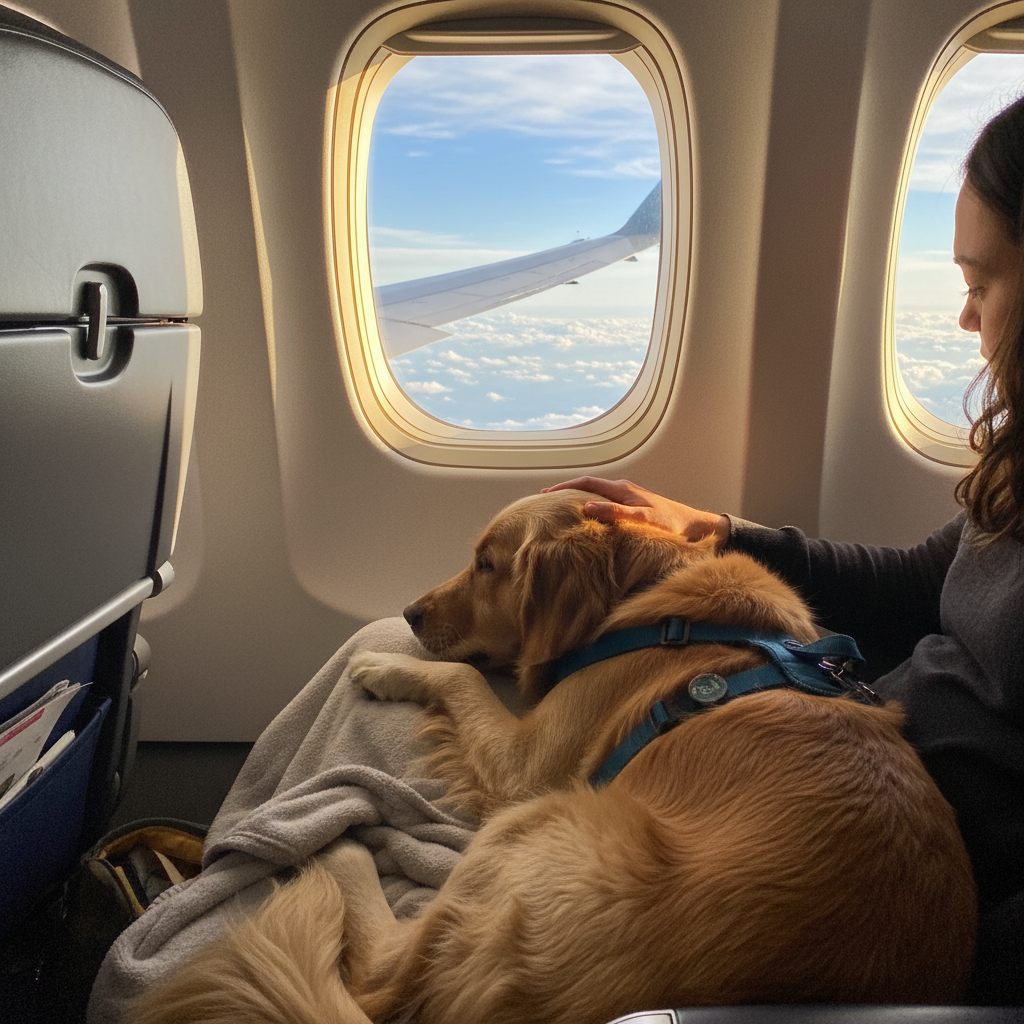
Can You Fly With an Emotional Support Animal?
Can You Fly With an Emotional Support Animal?
Not as an emotional support animal, no. Since the U.S. Department of Transportation revised its Air Carrier Access Act rules in January 2021, airlines are no longer required to accept ESAs as assistance animals. Every major U.S. carrier now treats them as ordinary pets. Your ESA letter carries no weight at the airport, gets you no fee waiver, and guarantees you nothing.
You can still bring the animal — but under the airline’s standard pet policy, which means a fee, a carrier that fits under the seat, size and weight limits, and a reservation made in advance because carriers cap how many animals travel per flight.
If you have read older guidance saying otherwise, it is out of date. A great deal of what is still online describes the pre-2021 rules, and people are being denied at check-in because of it.
What actually changed
The DOT published a final rule in December 2020 that took effect on January 11, 2021. It narrowed the definition of a service animal under the Air Carrier Access Act to a dog individually trained to do work or perform tasks for a person with a disability — including psychiatric disabilities.
Two consequences follow directly. Only dogs qualify; cats, rabbits, birds, and everything else are out regardless of documentation. And training is the test. An animal that helps by its presence alone, which is the definition of an emotional support animal, does not meet it.
The DOT’s stated reasoning was aligning the air travel definition with the ADA’s, and responding to airline reports of untrained animals behaving badly in cabins. Whatever one makes of that, the rule has been fully in force across U.S. carriers for years now and there is no sign of it reversing.
Your two actual options
Option 1: fly the animal as a pet
This is what most ESA owners now do. The practical requirements:
- A pet fee, typically somewhere around $100 to $150 each way on U.S. carriers — and charged per segment, so a round trip with a connection can run several hundred dollars in fees alone.
- An airline-compliant carrier that fits fully under the seat in front of you. The animal stays in it for the entire flight.
- Size and weight limits. If the animal does not fit in an under-seat carrier, in-cabin travel is generally not available, and cargo has its own restrictions and risks.
- An advance reservation. Airlines cap in-cabin pets per flight. Book the animal’s spot when you book your seat, not later.
- Health documentation for some routes, and considerably more for international travel — rabies certificates, health certificates, and destination-country import requirements that can take weeks.
Option 2: a psychiatric service dog
This is the only route that retains cabin access, and it is a genuinely different thing from an ESA.
A psychiatric service dog is individually trained to perform specific tasks related to a psychiatric disability. Interrupting a panic attack by applying pressure. Performing a room search for someone with PTSD. Reminding a handler to take medication. Guiding a disoriented handler to an exit. The task is the qualifying element — not the diagnosis, and not how much the dog helps emotionally.
Psychiatric service dogs fly in the cabin at no charge under the ACAA. Airlines may require you to submit the DOT’s Service Animal Air Transportation Form, which attests to the dog’s training, health, and behaviour, generally up to 48 hours before departure. For flights of roughly eight hours or more, a second form about the dog’s ability to avoid relieving itself in the cabin may also be required. These forms are on the DOT website, and you complete them — a mental health provider does not fill them out on your behalf.
There is no shortcut here. Task training takes months to years, whether done professionally or by the handler. A dog cannot be converted into a service dog by paperwork.
Where your ESA letter still matters
The 2021 rule changed air travel only. It did not touch housing, and housing is where ESA protections are strongest.
Under the Fair Housing Act, an emotional support animal is an assistance animal, and housing providers are generally required to make a reasonable accommodation — waiving no-pet policies and pet fees or deposits — for a tenant with a disability-related need supported by documentation from a licensed provider. That protection is unaffected by anything the DOT did.
So a legitimate ESA letter remains valuable. It is simply a housing document now rather than a travel document. Housing rights for assistance animals covers how that works in practice, including what a landlord may and may not ask for.
College and university housing generally follows the FHA framework as well, though ESAs are usually restricted to residences rather than classrooms and dining halls.
Avoid the registries
No federal ESA registry exists. No certificate, ID card, vest, or database entry has legal force for either travel or housing, and the sites selling them — often for $100 or more, sometimes with instant approval — are selling nothing.
What actually carries weight is a letter from a licensed mental health professional who has evaluated you, written on their letterhead, stating that you have a condition that substantially limits a major life activity and that the animal provides disability-related support. It names the provider, their license type and number, and the date.
Signals that a service is not legitimate: instant approval without any clinical assessment, a provider not licensed in your state, “registration” or “certification” language, or a promise that the letter guarantees airline access. That last one is now an outright false claim.
If you are flying with a pet anyway
A few practical things that reduce the difficulty, independent of legal status.
Get the animal used to the carrier weeks ahead, not the night before — leave it out at home with the door open and something familiar inside. Take short car journeys in it first. Book a direct flight where the cost difference allows, since each connection means another fee and another stretch of handling. Avoid sedatives unless a veterinarian has specifically recommended them for your animal; they carry risk at altitude and several airlines discourage them.
And call the airline’s accessibility or special services desk rather than relying on the website. Policies differ between carriers and change, and a documented phone conversation is worth more than an assumption.
Frequently asked questions
Can I fly with my emotional support animal in 2026?
Only as a pet, under your airline’s standard pet policy, with fees and carrier requirements. Airlines have not been required to accommodate ESAs as assistance animals since January 2021.
Do airlines accept ESA letters?
No. U.S. airlines no longer recognize ESA letters for air travel. The letter remains valid for housing under the Fair Housing Act.
Are there fees?
Yes, standard pet fees apply — commonly around $100 to $150 each way, charged per flight segment. The old prohibition on charging for an ESA no longer applies.
What about cats and other animals?
Only dogs qualify as service animals under the current air travel rule. All other species travel as pets, subject to each airline’s policy.
Can my ESA become a psychiatric service dog?
Possibly, if the animal is a dog with the right temperament and you undertake genuine task training. This takes months at minimum and cannot be accomplished with documentation.
What about international flights?
The DOT rule governs U.S. carriers. Foreign airlines set their own policies and most also treat ESAs as pets. Destination countries impose their own import requirements, including quarantine in some cases — research those well in advance.
Does an ESA letter still help with housing?
Yes, and that is now its main function. Fair Housing Act protections for assistance animals were not affected by the air travel change.
Need a legitimate ESA letter for housing?
Samz Mental Health provides ESA letters following a real clinical evaluation with a board-certified psychiatric nurse practitioner licensed in your state. No registries, no instant approvals, and no promises about air travel we cannot keep.
Sources
- U.S. Department of Transportation — Service animals on flights
- HUD — Fair Housing and Equal Opportunity
Medically reviewed by Samuel Omolade, PMHNP-BC, board-certified Psychiatric Mental Health Nurse Practitioner. Last reviewed July 2026. Airline policies and federal regulations change; confirm current requirements directly with your carrier and the DOT before travel. This article is general information and is not legal advice.