
Austin’s Mental Health Crisis: A Booming City Turns to Virtual Psychiatry
Austin’s Mental Health Crisis: How a Booming City Is Turning to Virtual Psychiatry
Austin is one of the most talked-about cities in America — a place that tech giants chose, that transplants flooded, and that the real estate market transformed almost overnight. But beneath the surface of this economic success story lies a quieter, more urgent problem: Austin’s mental health infrastructure has not kept pace with its population. For thousands of residents navigating burnout, anxiety, depression, and the pressures of life in a city that never seems to slow down, virtual psychiatry has become not a convenience but a necessity.
A City That Grew Faster Than Its Healthcare System
Austin has ranked among the fastest-growing major cities in the United States for several consecutive years. The metro area has absorbed hundreds of thousands of new residents over the past decade, drawn by a strong job market, a relatively low cost of living compared to coastal cities, and a vibrant cultural identity. That influx, however, created pressure on every public system — and mental healthcare felt it acutely.
The relationship between rapid urban growth and mental health strain is well-documented. Displacement anxiety, community loss, and the disorientation of watching a familiar place transform at speed all contribute to psychological stress. Long-term Austin residents have experienced what sociologists call “place-based grief” — a mourning of the city they once knew. Meanwhile, newcomers often arrive without established social support networks, making them vulnerable to isolation and depression, especially during the difficult early months of relocation.
The result is a city with high mental health demand and a healthcare system that was never designed to meet it at this scale.
The Tech Economy and the Burnout Epidemic
Austin’s emergence as a major technology hub has brought enormous economic vitality. Major employers have established significant operations in the area, and the surrounding ecosystem of startups and mid-size tech firms has grown accordingly. With that growth has come a workforce culture characterized by high performance expectations, long hours, always-on communication, and deeply competitive environments.
Tech worker burnout is not a new concept, but Austin’s rapid transformation into a tech-forward economy has concentrated these pressures geographically. Workers who relocated for high-paying roles often find themselves in demanding positions with limited downtime, thin local social connections, and enormous financial pressure — particularly as Austin’s cost of living has surged alongside its tech economy reputation.
For many Austin tech workers, the barrier to getting help is not willingness — it is time and access. Fitting a psychiatric appointment into a demanding work schedule, commuting across a car-dependent city, and then waiting weeks or months for an available provider creates a system that practically discourages help-seeking behavior.
Austin’s Psychiatric Provider Shortage: The Wait Time Problem
Despite being a major metropolitan area, Austin faces a significant shortage of psychiatric providers relative to its population. Mental health workforce data consistently shows that Texas ranks among the states with the fewest mental health professionals per capita, and Austin — despite its resources — reflects this statewide challenge. Patients seeking in-person psychiatric care in Austin commonly encounter wait times stretching from several weeks to several months before an initial appointment is available.
This is not a minor inconvenience. For someone in the early stages of a depressive episode, or a tech worker whose burnout has crossed into clinical anxiety, a three-to-six-month wait is not just frustrating — it is medically significant. Mental health conditions that are addressed early respond better to treatment. Delay often means worsening symptoms, missed work, strained relationships, and in serious cases, crisis escalation.
The provider shortage is driven by multiple factors: medical school pipeline gaps, insurance reimbursement rates that make private psychiatric practice economically challenging, and the simple reality that Austin’s population grew faster than its trained workforce could accommodate.
University of Texas Students and Campus Mental Health Gaps
The University of Texas at Austin enrolls tens of thousands of students, making it one of the largest universities in the country. Student mental health has become a national conversation, and UT Austin is no exception to the challenges that large public universities face in providing adequate psychiatric support. Campus counseling centers are typically staffed for general counseling — not specialized psychiatric evaluation or medication management — and demand routinely exceeds available appointments.
Students dealing with ADHD-related academic struggles, adjustment disorders, anxiety tied to academic and social pressure, or emerging mood conditions often find that the campus system cannot meet their needs at the level of clinical complexity required. Many are navigating psychiatric care for the first time, without the support systems or knowledge that older adults might have developed over years of healthcare navigation.
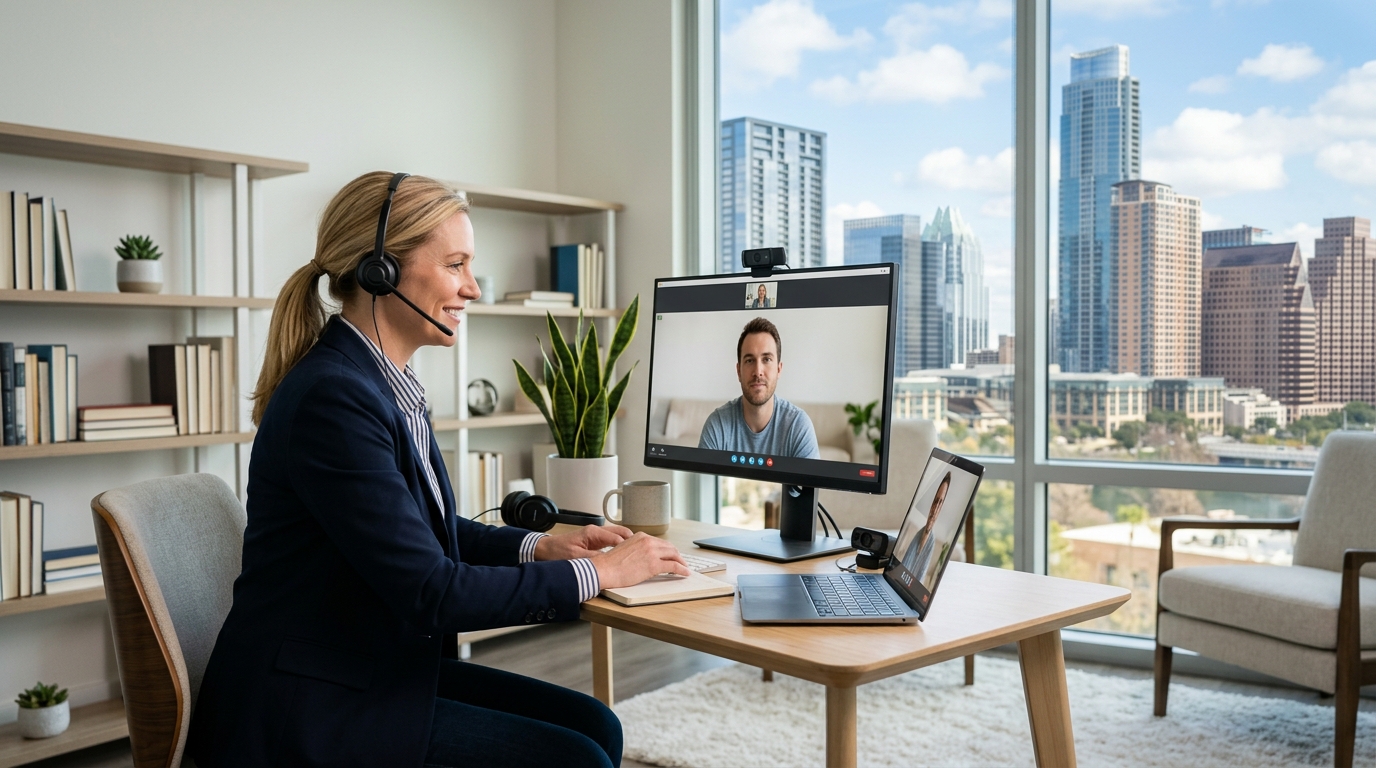
Virtual psychiatry has become an important access point for this population — offering flexible scheduling that accommodates class schedules, geographic convenience for students without reliable transportation, and a degree of privacy that reduces the stigma barrier some students experience around seeking help.
Austin’s Broader Stressors: Cost of Living, Housing, and Identity
Beyond tech burnout and the provider shortage, Austin residents are contending with a set of city-specific stressors that compound mental health strain. Housing costs have risen dramatically, and the anxiety of housing insecurity — or of being priced out of a neighborhood that once felt like home — is a genuine psychological burden for many residents across income levels.
Post-pandemic Austin has also undergone a kind of identity shift. The city absorbed an enormous wave of remote workers and relocated professionals during and after the pandemic, fundamentally changing its social texture. Longtime residents describe a sense of alienation in their own city. Newcomers describe difficulty building authentic community. Both experiences can produce a low-grade chronic stress that quietly accumulates into anxiety, difficulty sleeping, irritability, and emotional dysregulation.
How Telepsychiatry Is Filling the Gap
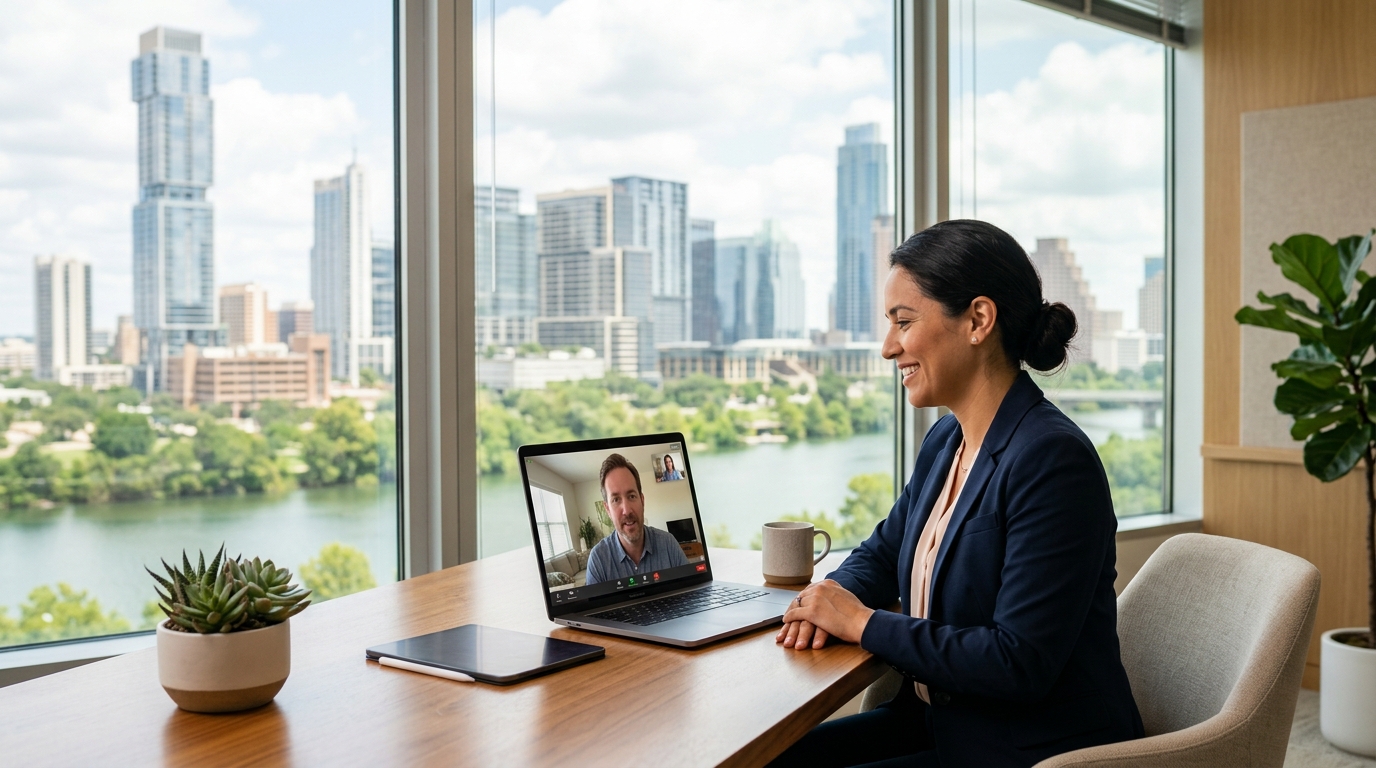
Virtual psychiatry addresses the Austin mental health crisis in a structurally important way: it expands effective provider capacity without requiring a physical clinic. A board-certified psychiatric provider practicing via telehealth can serve patients across Texas, reaching Austin residents who cannot wait months for a local in-person appointment.
For Austin’s tech workers, virtual psychiatric care fits into a work-from-home or hybrid schedule without the overhead of cross-city commutes. For students, it offers after-hours availability that campus services rarely provide. For long-term residents managing anxiety related to housing stress or community change, it offers consistent, ongoing care without the disruption of practice closures or geographic moves.
Telepsychiatry sessions function much like in-person appointments — comprehensive evaluations, medication management where appropriate, and follow-up care coordinated over a secure HIPAA-compliant video platform. What changes is the friction: there is no parking, no waiting room, and no geographic constraint on which provider a patient can see.
The conditions most commonly addressed through virtual psychiatric care for Austin residents reflect the city’s specific stress profile: anxiety disorders, depression, burnout-related presentations, sleep disruption, and attention and focus concerns that may have worsened under high-pressure professional environments.
Frequently Asked Questions
Is virtual psychiatry as effective as in-person care?
Research consistently supports that telepsychiatry produces equivalent clinical outcomes to in-person psychiatric care for the majority of conditions, including anxiety, depression, and medication management. The American Psychiatric Association has affirmed telepsychiatry as a legitimate and effective modality of care delivery.
What do I need for a virtual psychiatric appointment?
You need a device with a camera and microphone — a smartphone, tablet, or computer — a stable internet connection, and a private, quiet space where you feel comfortable speaking openly. Your provider will share instructions for accessing their secure platform before your first appointment.
Does insurance cover telepsychiatry in Texas?
Insurance coverage for telepsychiatry has expanded significantly, particularly since 2020. Many major insurance plans cover virtual psychiatric visits at rates comparable to in-person care. Coverage details vary by plan, so it is worth confirming with your insurer before scheduling. Some providers also offer self-pay options for those without applicable coverage.
Can a virtual psychiatrist prescribe medication?
Yes. Board-certified psychiatric providers practicing via telehealth in Texas can conduct full evaluations and, where clinically appropriate, prescribe and manage psychiatric medications. Controlled substances are subject to specific regulatory requirements, but many commonly prescribed psychiatric medications are accessible through virtual care.
Ready to Connect With a Provider?
If you’re an Austin resident navigating burnout, anxiety, depression, or any of the pressures described above, virtual psychiatric care may be the most accessible path to getting the support you need — without a months-long wait. Learn more about working with a board-certified provider serving Austin and all of Texas.