How Long Does It Take to See a Psychiatrist in Texas?
How Long Does It Take to See a Psychiatrist in Texas?
Longer than it should, and the answer depends far more on where you look than on how sick you are. In the major metros — Houston, Dallas–Fort Worth, Austin, San Antonio — waits for a first psychiatric appointment commonly run weeks to months. Outside them, in much of West Texas, the Panhandle, the Trans-Pecos, and Deep East Texas, the question is not how long the wait is but whether a local psychiatrist exists at all. Many Texas counties have none.
The useful thing to know is that the wait is not fixed. It is a product of how you are searching, and three specific choices change it substantially. Those are covered below.
Why the wait is so long
This is a supply problem, not a demand problem. Mental health conditions occur at broadly similar rates across zip codes; psychiatric providers do not.
The federal government tracks this formally. The Health Resources and Services Administration designates Mental Health Professional Shortage Areas — places where the ratio of population to psychiatric providers falls below a workable threshold. A large share of Texas’s 254 counties carry that designation. Texas is the second-largest state by both population and land area, and its psychiatric workforce is concentrated in a handful of urban centres.
The geography compounds it. A resident of a far West Texas county may face a two-hour-plus drive each way to the nearest psychiatric provider — which assumes a working vehicle, time off, and childcare. For an older adult, someone with a disability, or a parent working hourly shifts, that is not a long trip. It is a closed door.
And the consequences are documented rather than theoretical: provider shortages track with higher rates of untreated depression, more emergency department visits for psychiatric crises, and elevated suicide rates in rural areas relative to urban ones.
The three things that actually determine your wait
1. Whether you are searching by city or by state
This is the largest single factor and the one most people get wrong.
Psychiatric licensure in Texas is granted at state level, not county level. A provider licensed in Texas can treat you by video whether they practise in Houston or in Amarillo. So searching for “psychiatrist near me” narrows your options to the handful within driving distance — which, in much of the state, is a very short list with a very long queue. Searching for a Texas-licensed provider offering telehealth opens the whole state.
That change alone frequently moves a wait from months to days.
2. Whether you need a psychiatrist specifically
Board-certified psychiatric mental health nurse practitioners (PMHNP-BC) diagnose, prescribe, and manage psychiatric medication. Their availability is generally better than that of psychiatrists, and for the common outpatient conditions — depression, anxiety disorders, PTSD, ADHD, stable bipolar disorder — they provide the same core service.
Complex, treatment-resistant, or high-acuity presentations may genuinely warrant a psychiatrist. Most first appointments do not.
3. Whether you are going through insurance
In-network psychiatric panels in Texas are frequently closed or badly out of date, and calling down an insurer’s directory is where weeks disappear. Self-pay and out-of-network practices usually have far shorter waits.
Whether that trade is worth it depends on your deductible. If yours is high and unmet, self-pay may cost less anyway — the arithmetic is set out in what an online psychiatrist actually costs.
What to do while you wait
If you already have an appointment scheduled months out, a few things are worth doing rather than simply waiting.
Ask to be put on the cancellation list. Practices rarely offer this and frequently have gaps. Say you can take short notice if you can.
See your primary care physician in the meantime. PCPs treat uncomplicated depression and anxiety routinely and can start a first-line medication, order thyroid and other labs, and refer onward. This is a legitimate bridge, not a downgrade.
Start therapy separately. Therapist availability is generally better than prescriber availability, and for mild to moderate presentations therapy alone is sometimes sufficient. The two do not have to start together.
Keep a symptom record. Sleep, mood, and what changed — it makes the eventual first appointment considerably more productive.
Where telepsychiatry helps, and where it does not
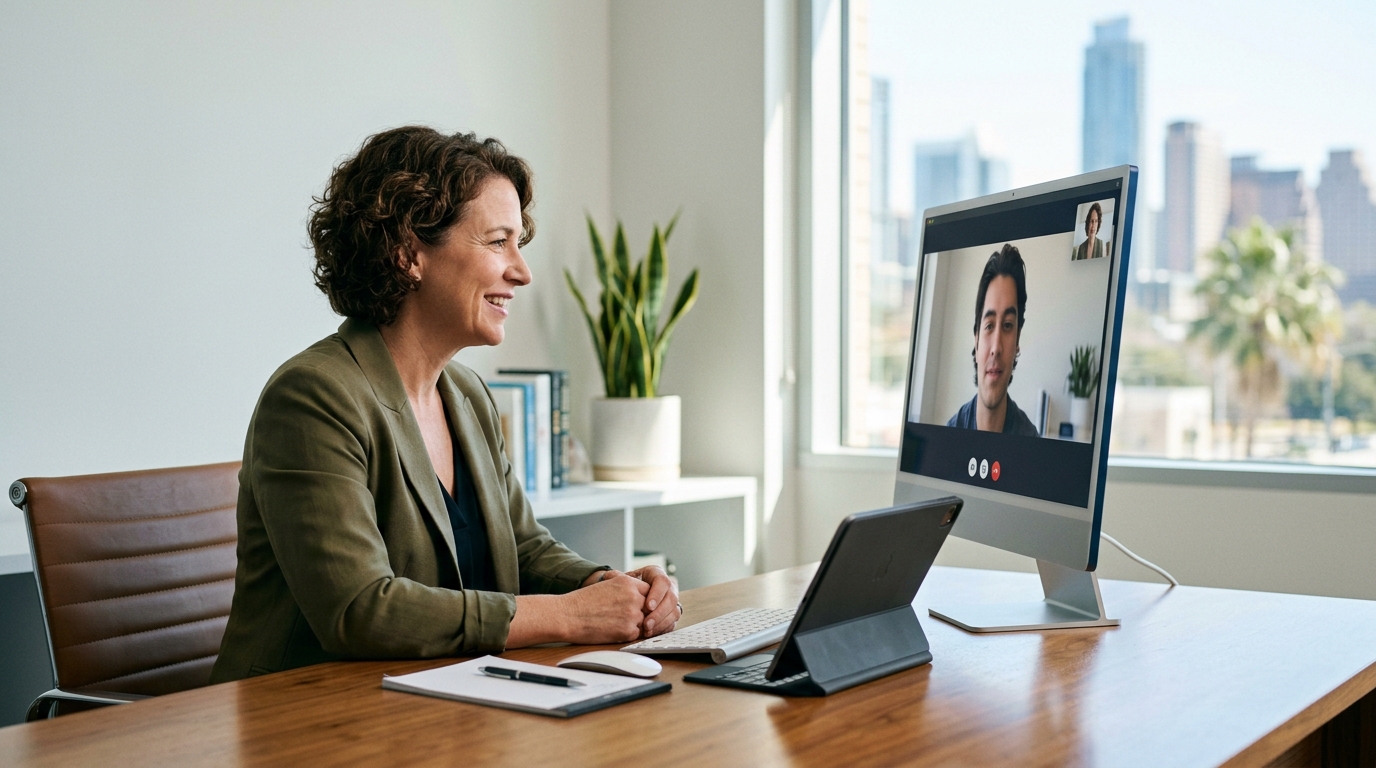
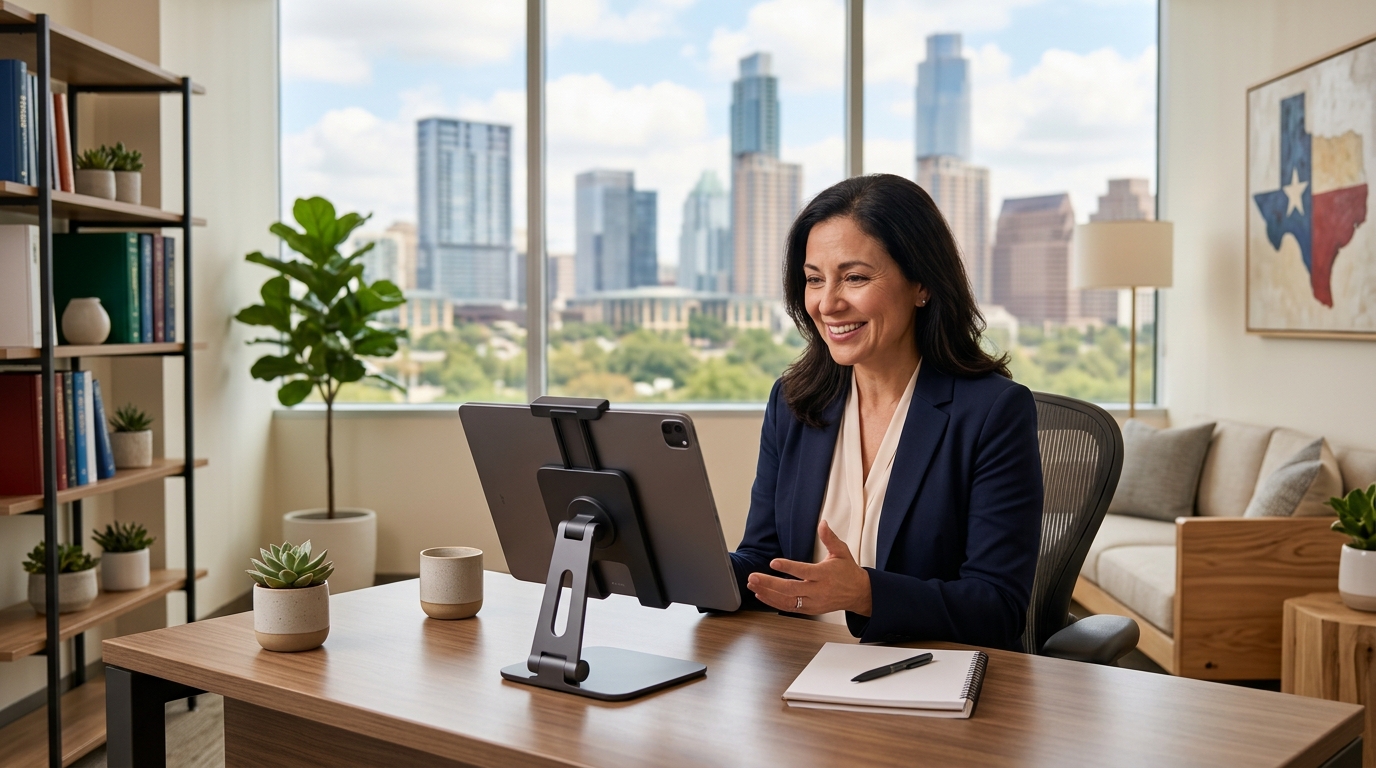
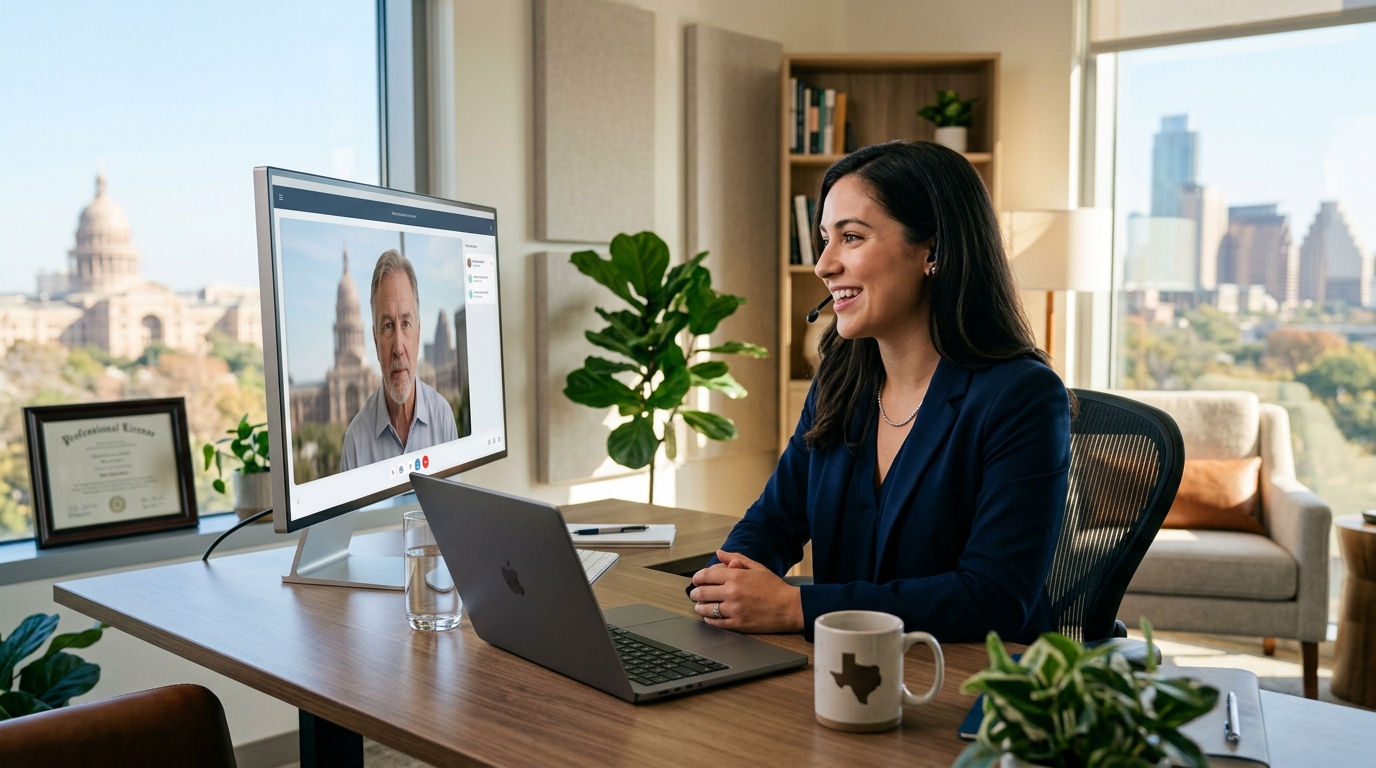
Video appointments do not create more psychiatric providers. What they change is how far each provider’s time can reach — a clinician in Austin can evaluate a patient in Lubbock without either of them spending three hours in a car for a twenty-minute medication review.
That matters most for the thing psychiatric treatment actually depends on: consistent follow-up. Medication titration needs contact every two to four weeks in the early phase. When each contact costs half a day of travel, people stop attending, and treatment fails for logistical reasons rather than clinical ones.
What it does not solve: acute crises, situations needing supervised withdrawal, long-acting injectables, or anything requiring hands-on assessment. Those still need a physical setting. The full comparison covers where each format is genuinely stronger.
Checking a Texas provider is legitimate
- Active Texas licence. Verify through the Texas Medical Board for physicians or the Texas Board of Nursing for nurse practitioners. Both offer free public lookup.
- Board certification — psychiatry for physicians, PMHNP-BC for nurse practitioners.
- A real first appointment. An initial evaluation scheduled for fifteen minutes is not an evaluation. Expect closer to an hour.
- A HIPAA-compliant platform, not a consumer video app.
- Clear pricing before you book, and a straight answer on insurance.
One caution specific to this state: Texas has particular rules for nurse practitioner practice, including a prescriptive authority agreement with a collaborating physician. That is a matter for the practice to have in order, not something you need to arrange — but a provider who cannot explain their own licensure clearly is worth a second look.
Frequently asked questions
How long is the wait to see a psychiatrist in Texas?
Weeks to several months for in-person care in the metros, and often longer or unavailable in rural counties. Telehealth with a Texas-licensed provider is usually the fastest route, frequently within days.
Can a psychiatrist prescribe medication over video in Texas?
Yes. Texas-licensed psychiatrists and psychiatric nurse practitioners can evaluate, diagnose, and prescribe by telehealth, subject to state and federal rules. Controlled substances carry additional requirements that change periodically — ask any provider about current constraints.
Do I need a referral?
Usually not. Most PPO plans and direct-pay practices do not require one; some HMO plans do.
Is a psychiatric nurse practitioner as good as a psychiatrist?
For most outpatient conditions, a board-certified PMHNP provides equivalent evaluation, prescribing, and follow-up. Complex or treatment-resistant cases may benefit from a psychiatrist.
What if I live in a county with no psychiatrist?
That is common in Texas and it is precisely the situation telehealth addresses. Any Texas-licensed provider can treat you by video regardless of the distance between you.
You do not have to wait months
Samz Mental Health provides telepsychiatry across Texas with a board-certified psychiatric nurse practitioner — from Presidio County to inner-loop Houston. No referral required.
Sources
- HRSA — Health Professional Shortage Areas
- Texas Health and Human Services — Mental Health and Substance Use
Medically reviewed by Samuel Omolade, PMHNP-BC, board-certified Psychiatric Mental Health Nurse Practitioner. Last reviewed July 2026. Wait times vary by region, insurer, and provider. This article is general information and is not a substitute for individual medical advice.